

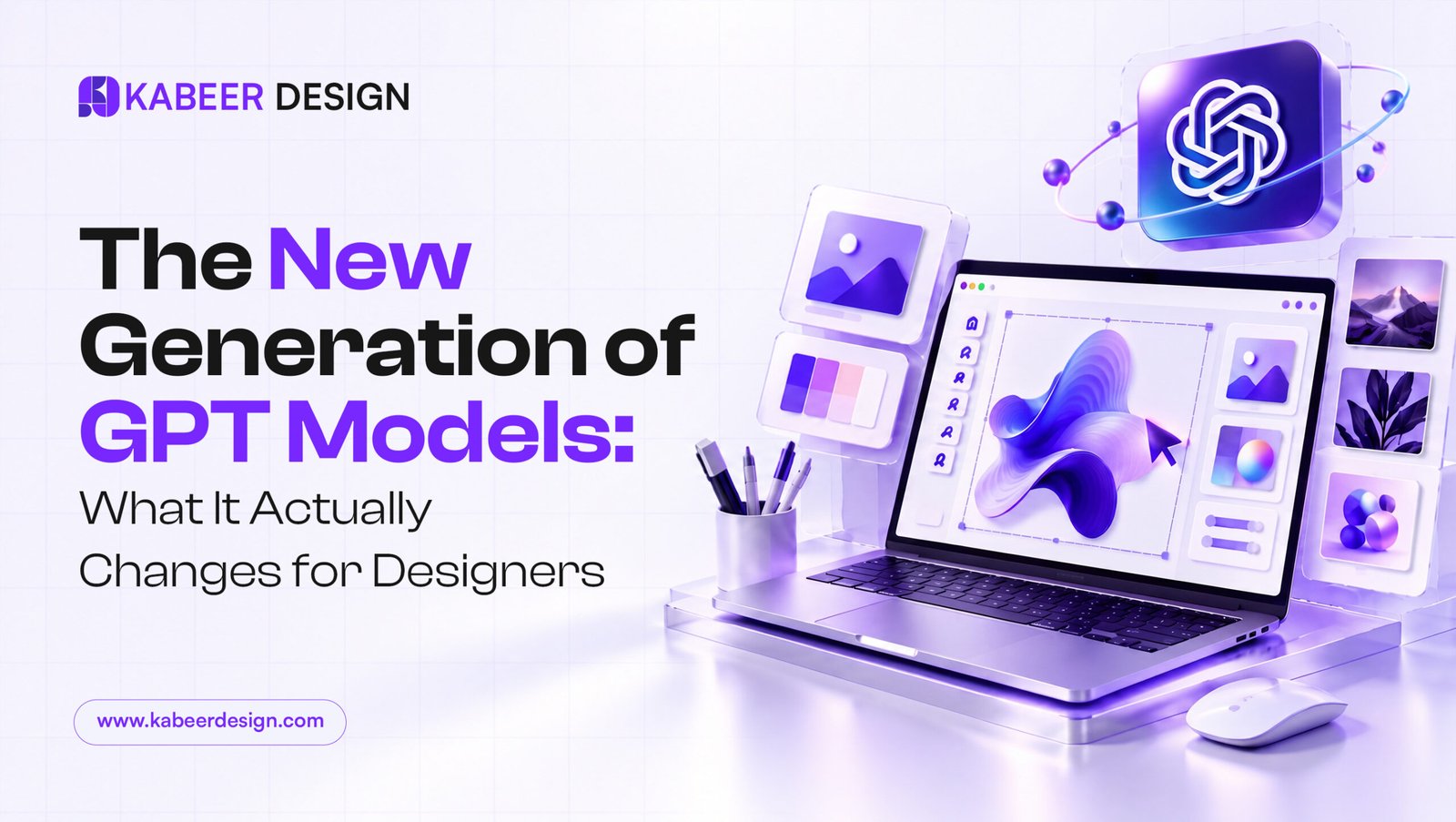
Every few months a new GPT-class model ships, and every few months designers ask the same question: is this the one that replaces us? After using these tools daily in real client work, my honest answer is no. But the newest generation does change how a working designer should spend their hours, and ignoring that is the real risk.
What the new models are genuinely good at
The current generation of GPT models is dramatically better at three things that matter in a studio: understanding images, following long creative briefs, and producing usable first drafts of copy, naming ideas and concept directions. Feed one a brand brief and it will return moodboard directions, tone-of-voice options and taglines in seconds. None of them are finished work. All of them are useful starting points.
Where I use them every week: writing first-draft case study text, exploring naming territory before a branding sprint, summarizing messy client feedback into a clear revision list, and generating placeholder copy that is far better than lorem ipsum. That last one alone saves an hour on almost every layout.
What they are still bad at
Taste. Consistency. Accountability. A model can generate fifty logo concepts, but it cannot tell you which one will still look right on a shop sign in five years, survive one-color printing, or fit the founder’s story. It cannot sit in a feedback call and hear what the client means behind what they say. Craft decisions, kerning, print specs, brand systems that hold together across hundreds of touchpoints: this is still human work, and clients feel the difference immediately.
How I actually fold AI into client work
- Research and territory: AI for competitor scans and reference gathering, then human judgment on direction.
- Copy scaffolding: AI drafts, designer edits. Never ship raw output.
- Variations, not concepts: once a direction is approved, AI helps explore executions fast.
- File hygiene: AI-powered search finally makes years of messy project folders usable. This is exactly why I am building LayerFlow: it finds the source file behind any image, offline, on your own drive.
The honest takeaway
The designers who lose to AI will not lose to the model. They will lose to another designer who uses the model well and spends the saved hours on strategy, craft and client relationships. Treat the new GPT generation like you treated Photoshop actions or Figma plugins: a lever, not a replacement. Your taste is the product. The tools just got faster.
Stop losing your source files.
LayerFlow finds the PSD behind any image, offline, on your device. Join the early access waitlist and get it first.
Join the waitlist →